Your First Classic Car Rally: Preparation and Checklist
Your first classic car rally: what to sort out beforehand, what to pack in the car and how rally day works. Includes a practical checklist.
You do not need professional kit for your first classic car rally, but you do need good preparation. If the car, the paperwork and your equipment are sorted and you know the regulations, you can focus on what matters on the day: finding the route and holding the average. This checklist takes you there step by step.
Pick the right event
Not every classic rally is made for beginners. Some are relaxed tours with a few tests. Others are serious competitions scored to the hundredth of a second with tricky navigation. Look for words like novice class, touring class or class without instruments.
The rally calendar lets you browse events by country and year. Read the regulations before you enter. They tell you:
- which cars and model years are eligible
- which aids are permitted, such as stopwatches, a tripmaster or apps
- how the event is scored and what the entry fee is
- when document checks, the briefing and the start take place
If you are new to the format, read What is a regularity rally? first.
Prepare the car
Rally days can be long, with mountain roads, stop and go through villages and plenty of idling at controls. Get the car checked in good time, not in the final week.
- check brakes, tyres and tyre pressures
- check the cooling system and fan, especially for summer events
- test lights, indicators and horn
- pack spare fuses, a fan belt and basic tools
- know your fuel range and plan fuel stops
- make sure the speedometer and odometer work properly
That last point is easy to forget. Without reliable distance measurement you can follow neither the roadbook distances nor the average speed.
Equipment in the cockpit
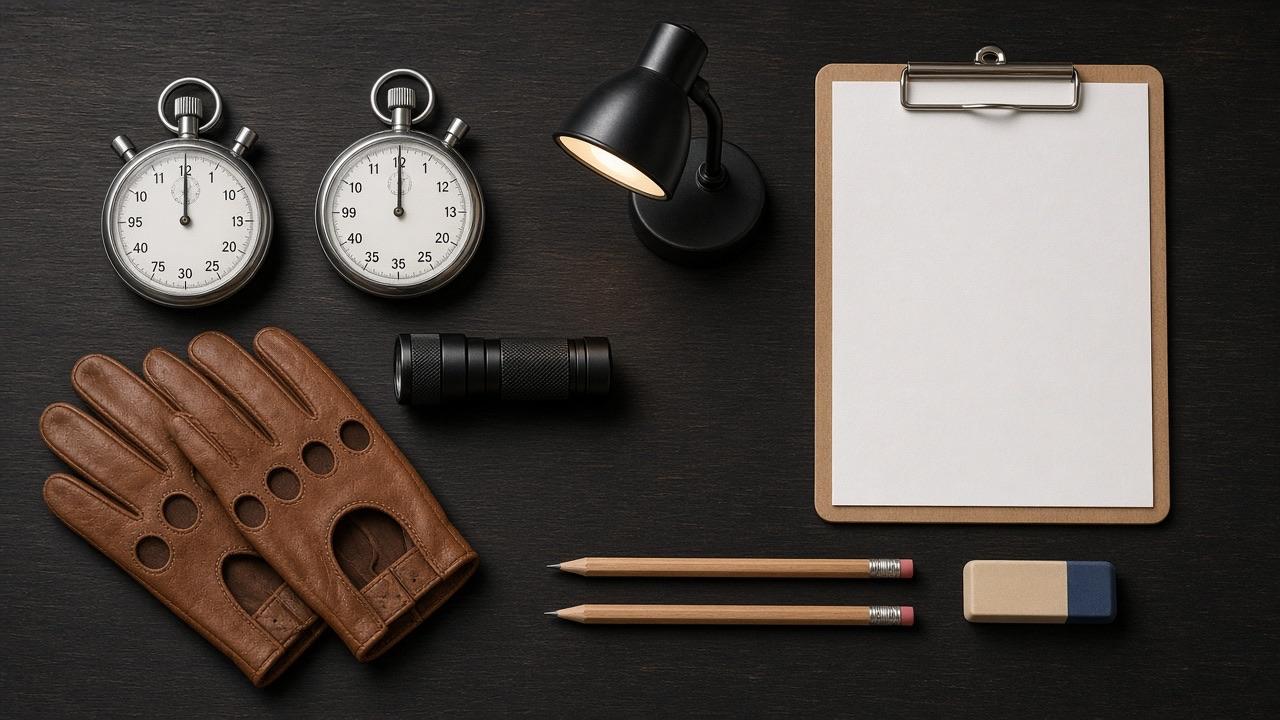
| Area | What you need | Why |
|---|---|---|
| Time | Two stopwatches, a watch with seconds | Backup if one fails |
| Distance | Tripmaster or a GPS app | Follow roadbook distances |
| Paper | Clipboard, pencils, highlighter, eraser | Notes and marks in the roadbook |
| Light | Map light or head torch | Tests at dusk |
| Maths | Average speed tables, calculator | Look up target times quickly |
| Power | Charging cable, phone mount | Navigation and timing all day |
| Safety | Hi-vis vest, warning triangle, first aid kit | Required in many countries and common sense |
You can build and print average speed tables in advance with the calculator.
Driver and co-driver: agree on roles
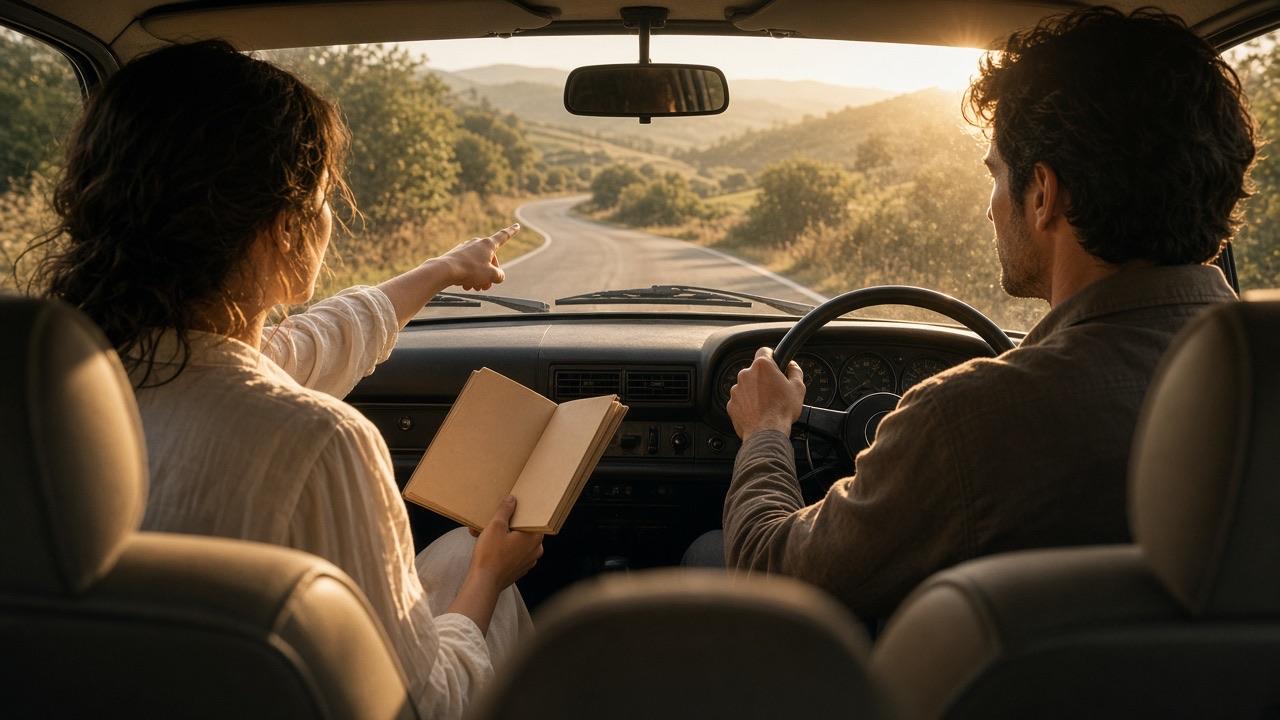
Decide before the start who does what. The driver drives and holds the speed. The co-driver reads the roadbook, keeps the time card, runs the stopwatches and makes the calls.
Agree on fixed calls: "two seconds early", "right in 200 metres", "control ahead". Short, clear calls keep both of you calm. Our co-driver tips go deeper.
Before the start: scrutineering, briefing, calibration
The day before or on the morning of the event there is usually a document check and a technical inspection. You get your start number, the roadbook and your board card. At the briefing the organiser explains route details and any changes to the regulations. Listen carefully and ask if anything is unclear.
Many rallies offer a calibration route. Drive it. Your tripmaster almost never measures exactly the same distance as the organiser, and calibration corrects that difference. Our guide on how to calibrate your odometer shows how.
Also set every watch to the rally's official time. Your start time always refers to that clock, not the one on your phone.
On rally day
Every time control has a due time for your arrival. Arriving early usually costs as much as arriving late. Whether there is any grace time, and how long it is, depends on the regulations. Wait a little before the control rather than checking in early.
Watch out for stamp controls and passage controls along the way. A missing stamp on your board card can cost more than a bad test.
And stay relaxed. If you get lost on the first test, you will not be the only one. Most crews remember their first rally fondly, whatever the result.
Common beginner mistakes
- skipping the calibration route, so every distance is slightly off
- not resetting the stopwatch, or starting it late
- leaving the board card in the glovebox
- checking in early at a time control
- not reading through the roadbook beforehand
In practice: your final week before the rally
- Read the regulations and the schedule one more time.
- Fill the tank, check tyre pressures, pack the tools.
- Test the stopwatches and change the batteries.
- Print average speed tables for the averages you already know.
- Do a practice run and rehearse your calls as a team.
If you use Rally Co-Pilot, set up a practice stage beforehand and drive it once with live GPS, so every step feels routine on rally day.
Terms in this guide
Read next
What Is a Regularity Rally? Rules and Basics
A regularity rally rewards precision, not speed. Learn how average speeds, target times, secret checks and penalty points work at classic car rallies.
How to calibrate your odometer for a rally
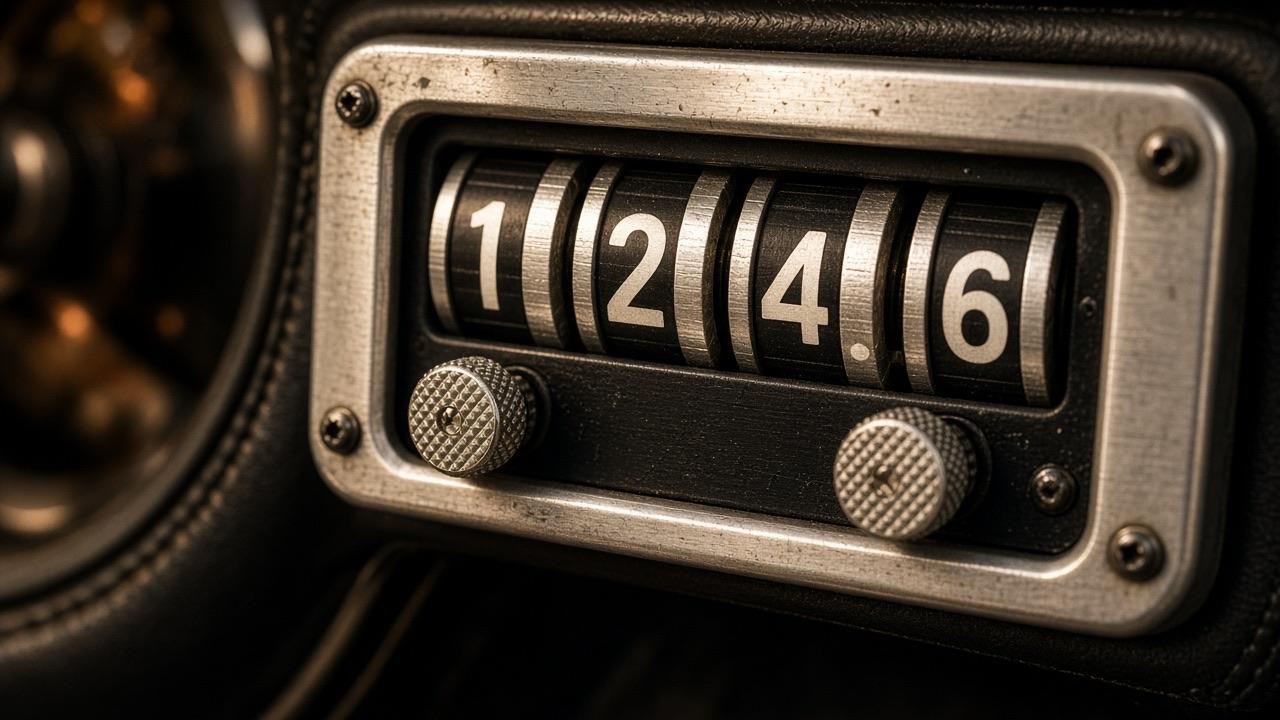
How to calibrate your odometer for a rally: drive the calibration route, work out the correction factor and avoid costly errors. With a worked example.
Co-driver tips for regularity rallies
Co-driver tips for regularity rallies: preparation, a tidy cockpit, clear calls to your driver, and what to do when you take a wrong turn.