How rallies measure time: light barriers, hoses, GPS
How rallies measure time: light barriers, pressure hoses, GPS trackers and secret checks explained, plus what each method means for your driving.
Classic car rallies measure time with light barriers, pressure hoses, GPS trackers or by hand at controls. The method decides how precise you need to be: to the minute, to the second or to the hundredth. Here is how each one works and what to watch out for.
Why the timing method matters to you
On a regularity test you have to hit a set target time. Every time deviation is turned into penalty points. How finely that deviation is recorded depends on the equipment. When timing is to the hundredth of a second, even a start button pressed too early counts. When it is to the full second, you have a bit more room.
The regulations usually tell you what equipment is used. Read them beforehand. It pays off.
Light barriers
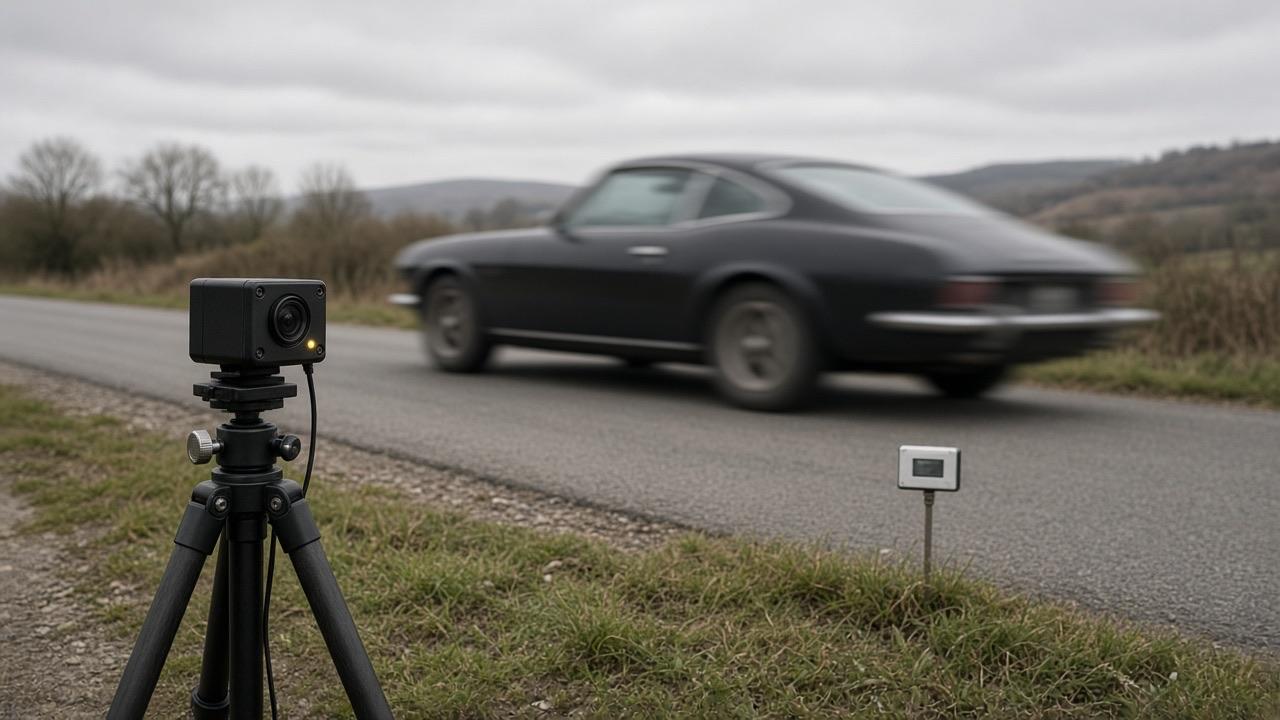
A light barrier has a transmitter and a reflector or receiver on opposite sides of the road. When your car breaks the beam, the time is recorded. Usually the front of the car triggers it.
Light barriers are very precise, often to the hundredth. You will find them at the start and finish of tests, on circuits and on tests run on closed ground.
What to watch for: The position is usually marked with a sign or a line. Note exactly where the beam is. The co-driver often sees it better than the driver.
Pressure hoses
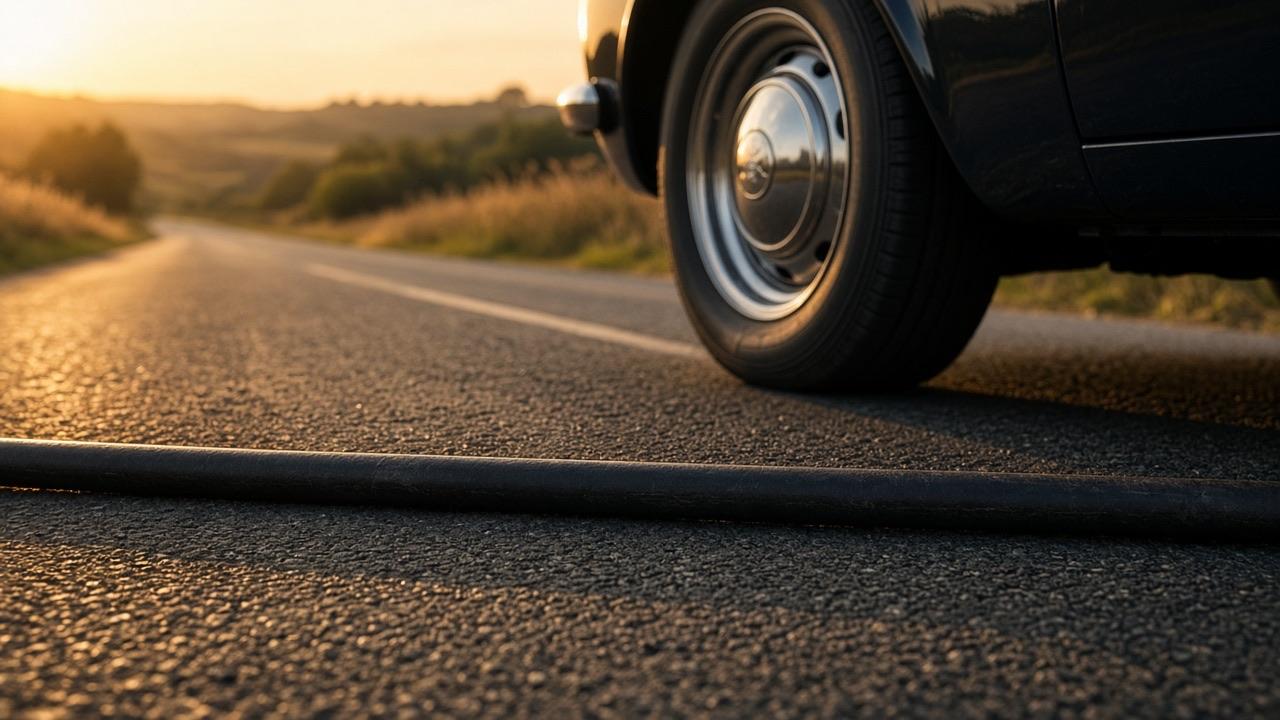
With a pressure hose, a rubber tube lies across the road. When a wheel rolls over it, the pressure inside rises and a sensor triggers the timing. Usually the first wheel to cross it counts.
Hoses are tough and quick to set up. That makes them popular on rallies held on public roads. Depending on the system, they also time to the hundredth.
What to watch for: You can see the hose on the road. Cross it smoothly. A hose in the middle of a test may well be an intermediate time.
GPS timing
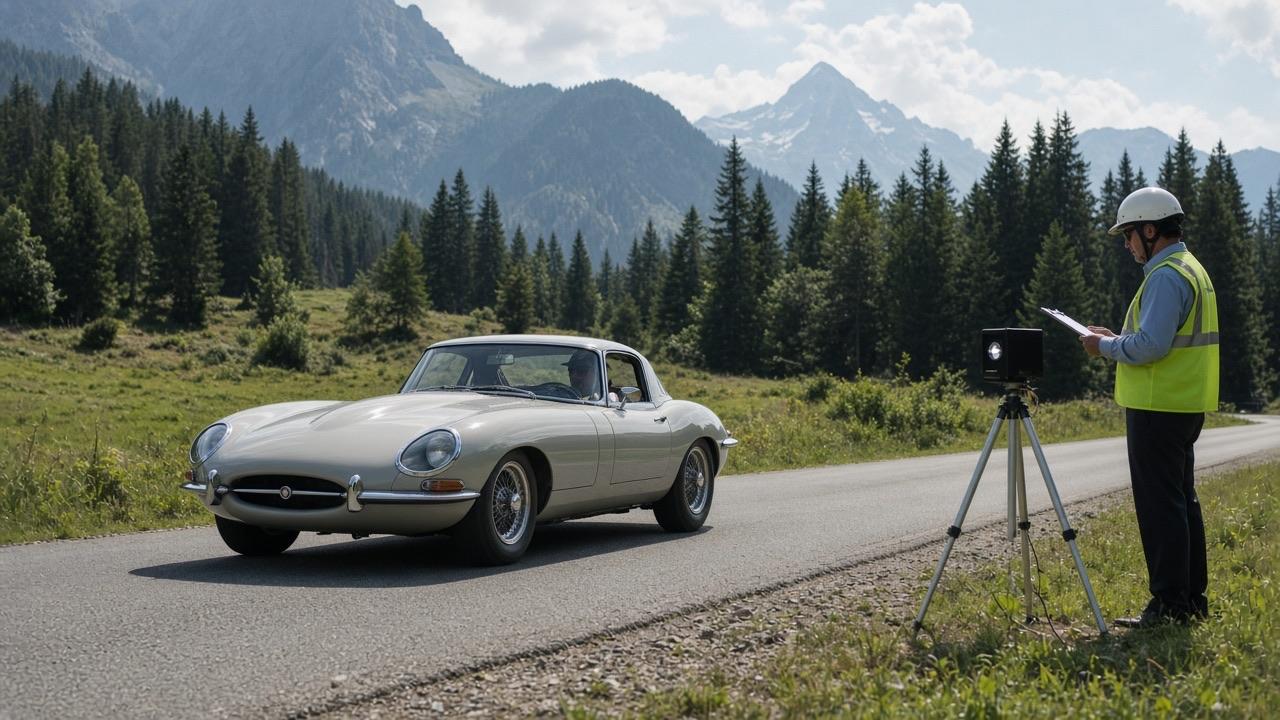
With GPS timing, each crew gets a tracker from the organiser. It logs position and time continuously. Afterwards the software works out when you passed each point.
The big advantage for the organiser: timing points cost nothing extra. No marshals at the roadside, no kit to set up. That is why GPS-timed rallies often have far more timing points. How precise it is depends on the system.
What to watch for: Mount the tracker exactly as instructed. You will not know where the timing points are, so you need to drive the whole test at a steady pace.
Secret checks
A secret check sits somewhere you do not know about. It can use a hose, a light barrier, GPS or a marshal with a watch. Its purpose is simple: if you only hit the time at the finish but were too fast or too slow along the way, you should not get away with it.
For you, that means driving your average speed evenly. If the test includes an average speed change, the new value applies from that point on. Making up time at the end does not work.
Manual timing at controls
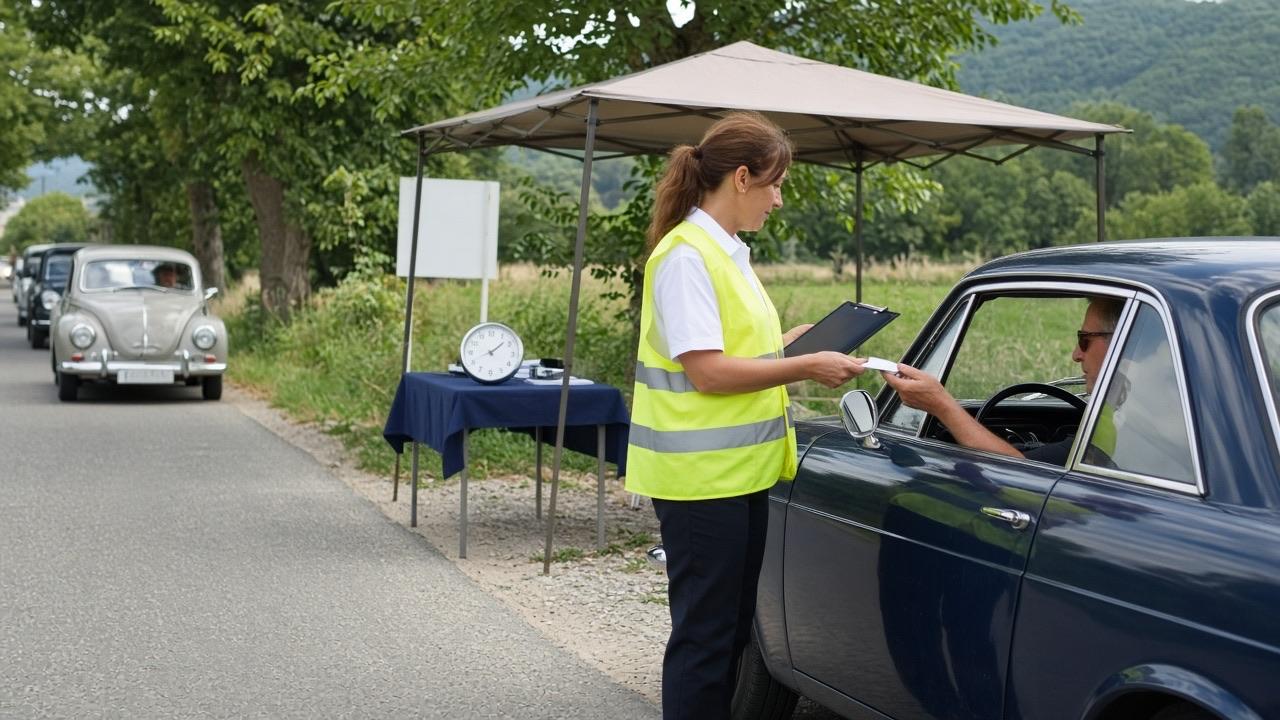
At a time control, marshals write your arrival time on your time card. This is usually in whole minutes. Timing follows the event's official time, so sync your clocks with it before the start.
Some secret checks are also timed by hand with a stopwatch or clock. In that case the resolution is often coarser.
The methods at a glance
| Method | Typical resolution | Typical use | What triggers it |
|---|---|---|---|
| Light barrier | Hundredths | Start and finish, circuits | Front of the car in the beam |
| Pressure hose | Hundredths | Start, finish, intermediate times | Wheel crossing the hose |
| GPS tracker | Depends on system | Any number of virtual points | Calculated position |
| Manual timing | Seconds or minutes | Time controls, some secret checks | Marshal |
These values are typical, not fixed. What applies to your rally is set out in the regulations.
What this means for your preparation
- Read the regulations. What equipment is used, what resolution, how many timing points?
- Sync your clocks. Every stopwatch and clock set to official time.
- Know the start. Flying or standing start? Where exactly is the start line?
- Drive steadily. Small corrections early beat one big correction at the end.
- Review afterwards. Compare your own times with the published results.
For a closer look at controls and scoring, read Time controls, time cards and penalty points. New to the sport? Start with What is a regularity rally?. And if you want to see the timing kit in action, pick an event from the rally calendar.
In Rally Co-Pilot, the live time deviation shows in metres or seconds whether you are ahead of or behind target. That is exactly what helps with secret checks.
Terms in this guide
Read next
Time controls, time cards and penalty points explained
Time controls, time cards and penalty points at a classic rally explained: working out your due time, grace time, stamp controls and scoring.
What Is a Regularity Rally? Rules and Basics
A regularity rally rewards precision, not speed. Learn how average speeds, target times, secret checks and penalty points work at classic car rallies.
Rally app or tripmaster? What you actually need
Rally app or tripmaster? An honest comparison for classic rallies: accuracy, installation, GPS reception, regulations and when each one makes sense.