Reading a Rally Roadbook: Tulips, Chinese Signs, Herringbones
Learn to read a rally roadbook: how tulip diagrams, Chinese signs and herringbones work at classic car rallies, with examples and common pitfalls.
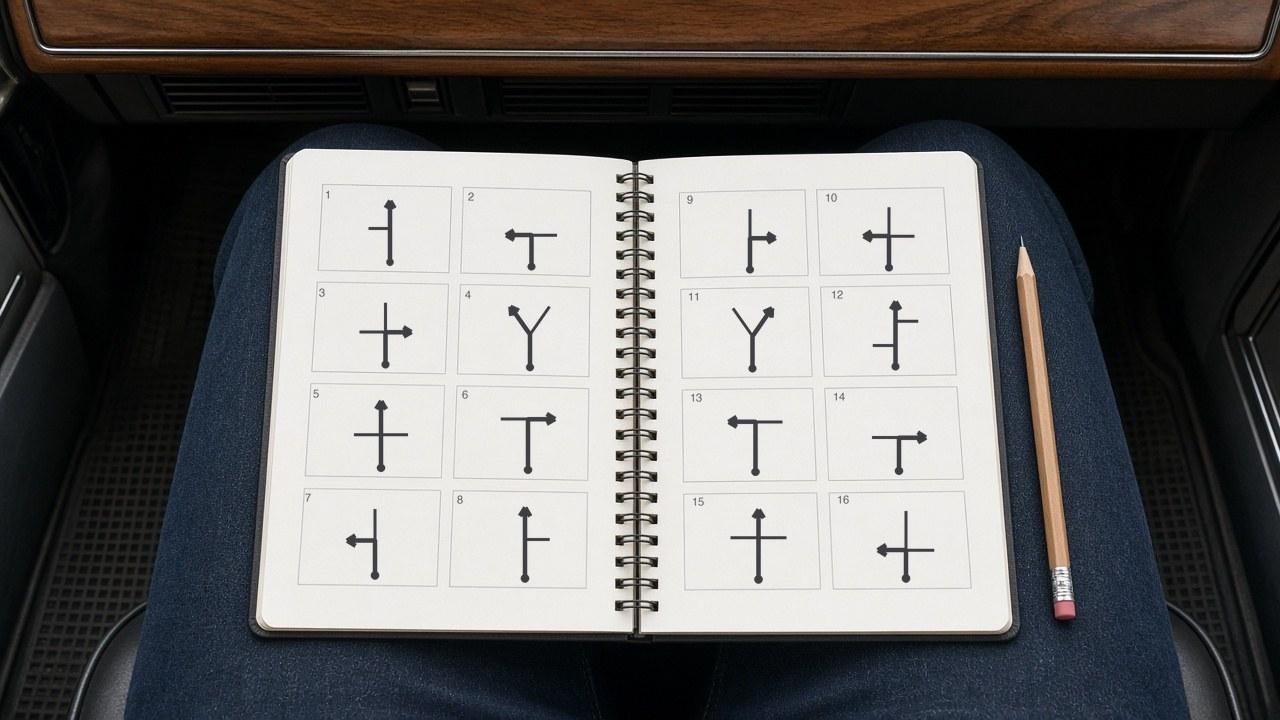
A rally roadbook does not describe the route with street names. It uses diagrams, symbols and distances. The three most common forms are tulip diagrams, Chinese signs and herringbones. Once you understand their logic, you can find your way on any classic car rally.
How a roadbook is laid out
The roadbook is the most important document in the car. It guides you section by section through the rally. A classic tulip roadbook is usually laid out like a table on each page:
| Column | Content |
|---|---|
| Total distance | Distance since the start of the stage |
| Intermediate distance | Distance since the previous instruction |
| Diagram | Tulip diagram of the junction |
| Notes | Signs, place names, controls, average speeds |
The exact format depends on the organiser. Read the legend at the front, it explains the symbols used.
Tulip diagrams
The tulip diagram shows a junction as you see it when you approach. The basic rules:
- The dot marks where you enter the junction.
- The arrow shows where you leave it.
- Roads without an arrow are roads you do not take.
Tulips are always drawn in your direction of travel, from bottom to top. The distance next to them tells you after how many kilometres the junction comes. An accurate tripmaster is a big help here, because many junctions look alike at first glance.
Tip: the co-driver should always have the next two diagrams in mind. When two junctions are close together, call them both at once.
Chinese signs
Chinese signs are heavily simplified junction symbols, often without any distance. One line shows where you come from, the arrow shows where you go. You follow them in the order given.
The big question is what to do at junctions that are not shown. Often the rule is "straight on" or "follow the main road", but this is not universal. Whether farm tracks, driveways or dead ends count as junctions is set by the regulations of each rally. Read that part carefully before the start.
Chinese signs are popular because they turn navigation into a puzzle. If you match a sign to the wrong junction, you often only notice a few signs later.
Herringbones
A herringbone shows a whole stretch of route as one continuous line. The short strokes to the left and right, the "bones", are side roads you drive past. Where the line itself turns, you turn too.
It is usually read from bottom to top, in your direction of travel. The trick is to count the bones. If the diagram shows three side roads on the right and then a left turn, you must pass exactly those three side roads first. Again, what counts as a side road is defined in the regulations.
Maps and other tasks
Some rallies add map reading. You get a map section with a marked route, points or lines, and have to work out the way yourself. A ruler, a highlighter and a calm head help.
Along the way there are often passage controls or stamp controls. They prove you drove the correct route. If a stamp is missing, you probably went wrong somewhere.
Using distances correctly
The organiser measured the roadbook distances with their own car. Your odometer almost always reads slightly differently. If your device shows 10.15 km on the calibration route instead of the official 10.00 km, your correction factor is 10.00 / 10.15 = 0.985.
Without calibration that error adds up. After 20 km you are already 300 m out. Our guide on how to calibrate your odometer explains the fix.
Common mistakes
- not reading the legend and misreading a symbol
- not resetting the tripmaster at a reference point
- counting a farm track as a junction with Chinese signs when the regulations say it does not count
- not counting the bones on a herringbone
- looking only at the diagram and ignoring signs listed in the notes
In practice: how to train
Ask your club or organisers for old roadbooks and drive a stage yourself. Even better, draw a short loop near home as tulips and a herringbone and let your partner drive it. That way you both learn each side.
As a co-driver, read through the roadbook the evening before, mark average changes and highlight tricky spots. More tricks are in our co-driver tips. Find your next chance to practise in the rally calendar.
Pages with distances and target speeds can be photographed with the AI roadbook scanner in Rally Co-Pilot and imported as sections.
Terms in this guide
Read next
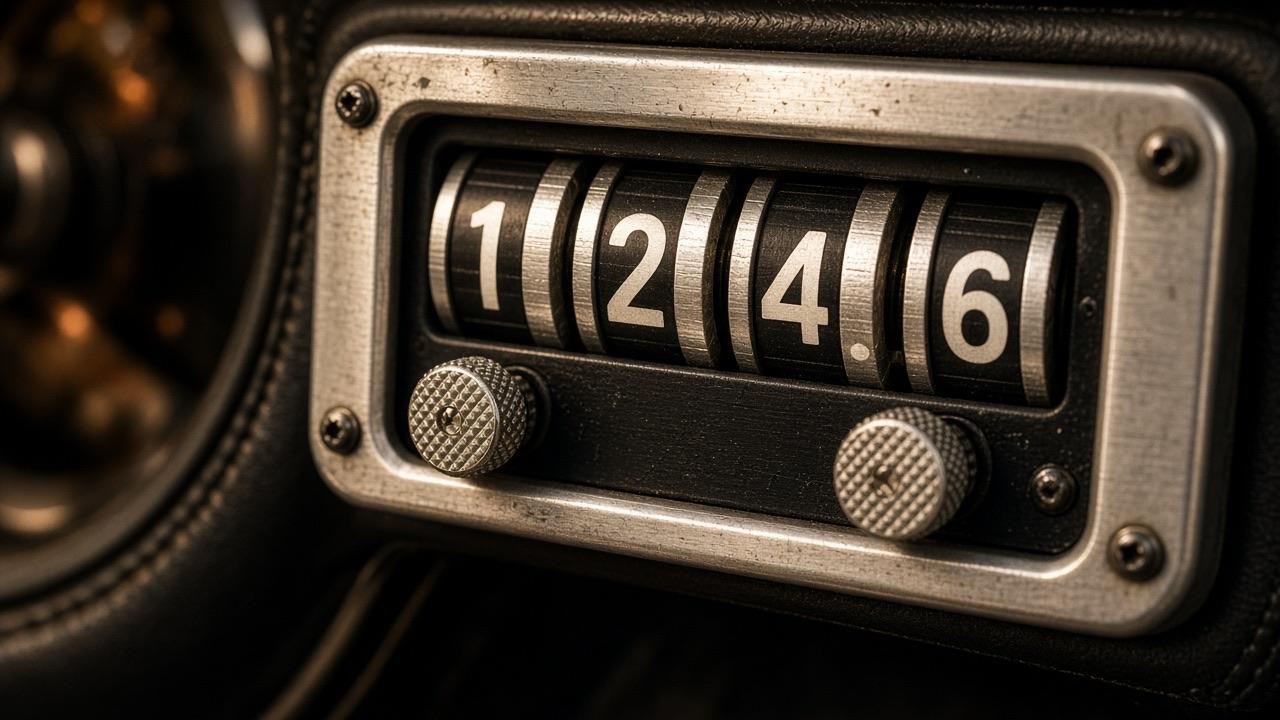
How to calibrate your odometer for a rally
How to calibrate your odometer for a rally: drive the calibration route, work out the correction factor and avoid costly errors. With a worked example.

Co-driver tips for regularity rallies
Co-driver tips for regularity rallies: preparation, a tidy cockpit, clear calls to your driver, and what to do when you take a wrong turn.
Your First Classic Car Rally: Preparation and Checklist
Your first classic car rally: what to sort out beforehand, what to pack in the car and how rally day works. Includes a practical checklist.