What Is a Regularity Rally? Rules and Basics
A regularity rally rewards precision, not speed. Learn how average speeds, target times, secret checks and penalty points work at classic car rallies.
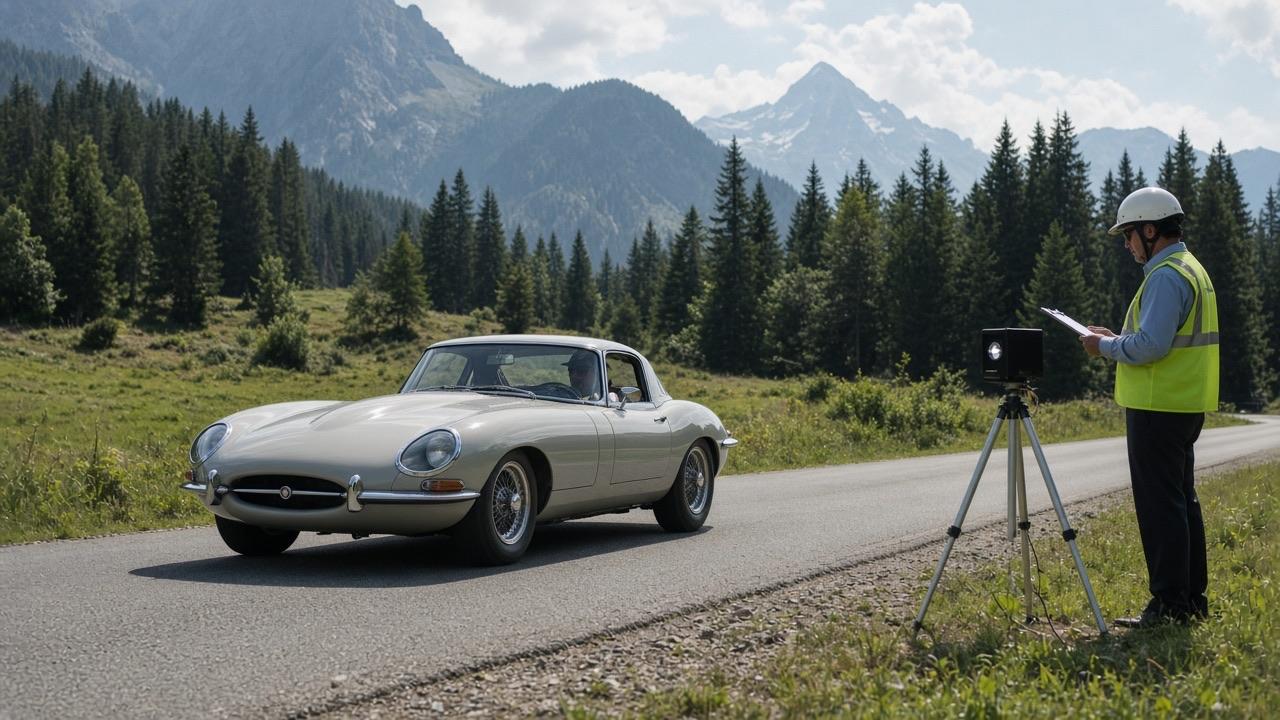
A regularity rally is not won by the fastest car. It is won by the crew that holds a set average speed most precisely. Timing is measured in seconds or even hundredths of a second, and every deviation costs penalty points. That is why the format suits classic cars so well: precision matters, horsepower does not.
The idea: hold the average, don't race
A regularity rally runs on public roads, usually over one or several days. The route is split into stages, and inside those stages sit the scored sections, the regularity tests. Some organisers call them special stages, although in modern rallying a special stage usually means a closed-road speed test.
For each test the organiser sets an average speed, for example 36 km/h. Distance and average together give you the target time. Drive too fast and you reach the timing point early. Drive too slow and you arrive late. Both cost you, because what is scored is your time deviation.
In the UK, the US and many other English speaking countries the format is often called a TSD rally, short for Time, Speed, Distance. The core idea is the same.
How is time measured?
Most of the time you do not know where the timing point is. That is the whole point. Depending on the event, organisers use different methods:
- Light barrier: a roadside sensor triggers as your car passes.
- Pressure hose: a tube across the road records the moment your front wheel rolls over it.
- GPS timing: a tracker in the car logs your run, and times are taken at virtual points along the route.
- Secret checks: timing points that are not shown in the roadbook. You have to stay on target for the whole test, not just at the end.
Many events combine several methods. Our guide to rally timing methods goes into more detail.
Penalty points and scoring
Every hundredth or every second of deviation earns penalty points. The exact rate depends on the regulations of each event. Many organisers cap the penalty per timing point, so one mistake does not wreck your whole rally.
There are also penalties outside the tests, for example for arriving early or late at a time control or missing a passage control. Stamps and times go on your board card, also called a time card. Look after it.
Some organisers apply a coefficient based on the car's year of manufacture. Older cars get a handicap bonus for weaker brakes, engines and instruments.
Who takes part?
Most entries are historic vehicles, from pre-war cars to youngtimers. The eligible years are defined in the event regulations. Some rallies follow the vehicle categories of FIVA, others use their own rules, and some run a separate class for newer cars.
There are two people in the car. The driver holds the speed. The co-driver navigates from the roadbook, does the maths and calls the times. In many crews the co-driver decides whether you finish on the podium or in mid-field.
Regularity, navigation, speed: the differences
| Format | What counts | Typical for |
|---|---|---|
| Regularity rally | Holding the average and hitting the target time | Classic rallies, historic tours |
| Orientation rally | Finding the correct route and every control | Club events, beginner events |
| Speed rally | Fastest time on closed roads | Licensed motorsport |
Many classic rallies mix regularity with navigation. You get tulip diagrams or Chinese signs and have to find the route while the clock runs. Our guide on reading a rally roadbook explains how.
What do you need?
To get started you need less than you might think:
- a roadworthy car that fits the event regulations
- driving licence and vehicle documents
- a reliable stopwatch, ideally two
- an accurate odometer or tripmaster
- pens, a clipboard and a reading light for the roadbook
Serious crews use a rally computer that compares target and actual progress continuously. Whether such devices are allowed is set by the regulations, and many events run separate classes for them.
How to get started
Pick an event with a beginner or touring class first. The rally calendar lists classic and regularity rallies across Europe and beyond. Read the regulations carefully: they define eligible cars, permitted equipment and how scoring works.
Before your first event, do a practice run. Work out a few sections with the average speed calculator and drive them on a quiet country road. You will quickly see how hard it is to hold exactly 36 km/h over several kilometres. Our checklist for your first classic car rally covers the rest of your preparation.
Rally Co-Pilot works out the target time for each section on your iPhone and shows you live, via GPS, how many metres you are ahead of or behind schedule.
Terms in this guide
Read next
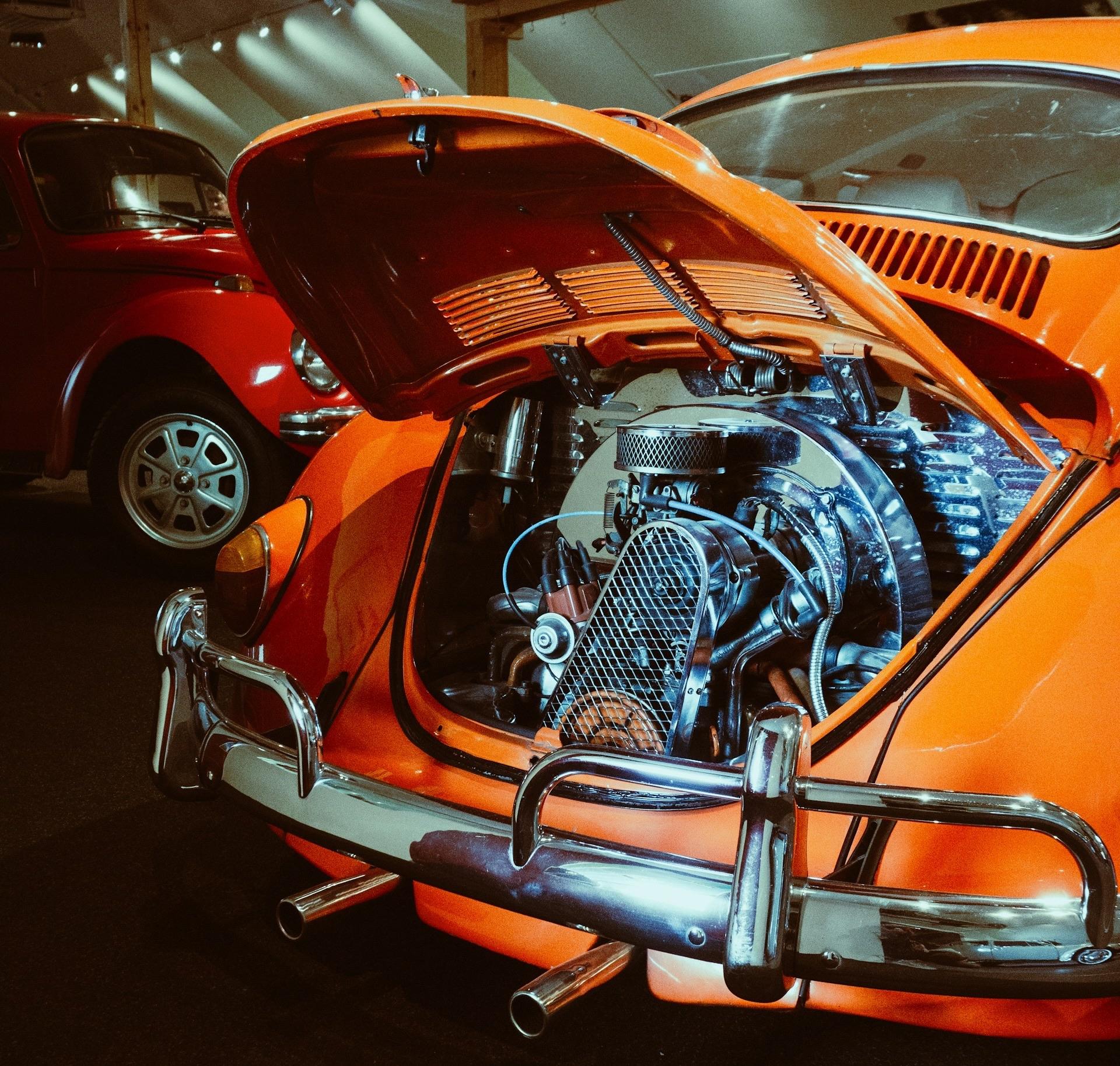
Your First Classic Car Rally: Preparation and Checklist
Your first classic car rally: what to sort out beforehand, what to pack in the car and how rally day works. Includes a practical checklist.
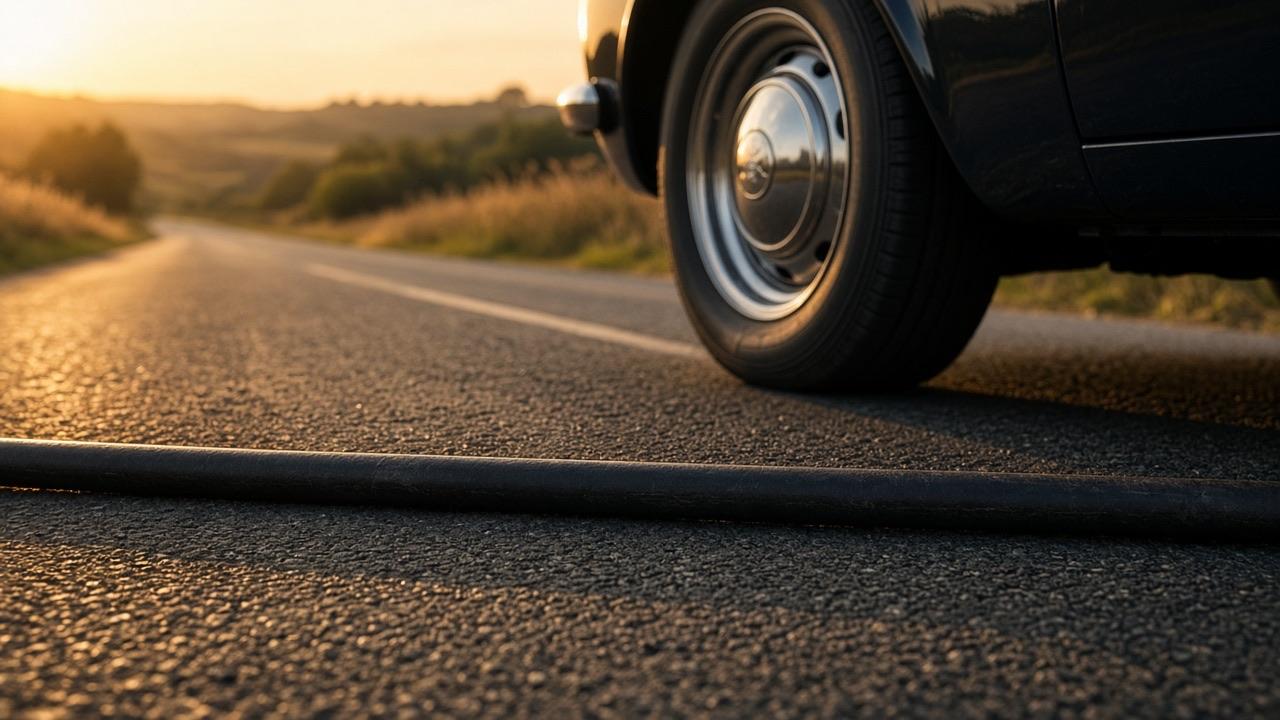
How rallies measure time: light barriers, hoses, GPS
How rallies measure time: light barriers, pressure hoses, GPS trackers and secret checks explained, plus what each method means for your driving.
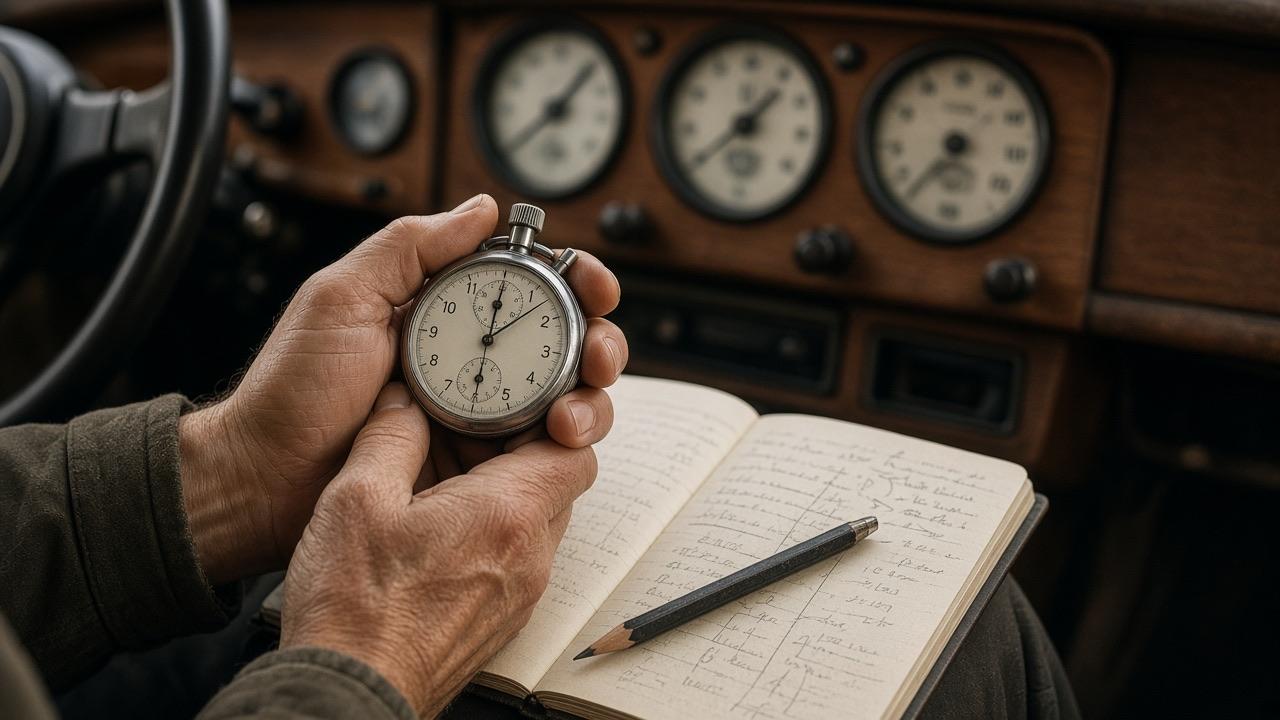
How to Calculate Average Speed for Regularity Rallies
Calculate average speed for regularity rallies: formulas for time, distance and speed, km/h to m/s conversion and worked examples with solutions.